If you’ve ever walked past a furniture showroom, run your hand over a heavy cotton upholstery curtain, or admired a custom leather tote with a raised, textured design that looks hand-carved, you might have wondered: can digital printing really replicate that same 3D effect on thick, dense fabrics? As the owner of a thick fabrics digital printing machine company, I get this question all the time—usually from furniture makers, home decor brands, or apparel designers who’ve tried outdated digital printers and walked away frustrated, convinced 3D texture on heavy cloth is only possible with expensive, labor-intensive screen printing or handcrafting. But after 12 years of troubleshooting and refining our own machines, I’m here to tell you: yes, it is possible, and it’s not as complicated as you might think. Let’s break down how it works, what actually works (and what doesn’t), and why this matters for anyone working with heavy fabrics. Thick Fabrics Digital Printing Machine
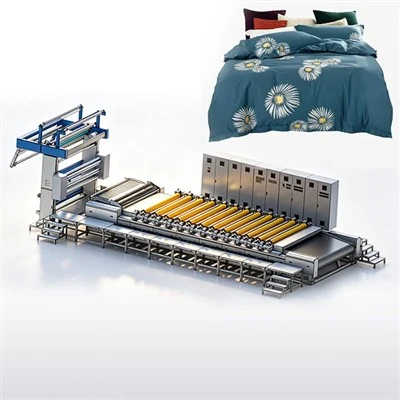
First, let’s clarify what we mean by “thick fabrics” and “3D effect” here, because that’s where most people get confused. When we say thick fabrics, we’re talking about the stuff that doesn’t crumple in your hand easily: 1000-oz. upholstery cotton, heavy canvas, linen-blend drapery, bonded leather, even thick fleece or technical performance fabrics used for workwear and outdoor gear. These materials have a dense fiber structure, often a tight weave, and a weight over 10 oz per square yard—way heavier than the lightweight 2-oz cotton used for t-shirts, the stuff most standard digital printers are built for.
The “3D effect” we’re targeting, too, isn’t the cheap, slightly raised ink you get from a basic flatbed printer that’s just thicker ink in one spot. That’s what I call “fake 3D”—it looks a little puffier under close inspection, but it flattens out after a few washes, and it’s only noticeable if you run your finger over the surface. The real 3D effect designers and brand owners want is tactile, durable, and layered: think raised botanical motifs on a linen curtain that feel like they’re stitched on, or sculpted geometric panels on an upholstery chair that add depth without adding bulk. It has to pass industry tests—hold up to 50 washes, resist scuffing from furniture legs, and not crack when someone sits on it.
For years, standard digital printers couldn’t do this on thick fabrics because of two big limitations: ink delivery and fabric prep. Most desktop or mid-range digital printers use single-pass or multi-pass technology that sprays fine droplets of ink onto a flat surface. But thick fabrics don’t absorb ink evenly—their dense weave means ink sits on the surface or beads up, so if you spray too much to build height, it runs or smudges. Standard printers also lack the precision to lay down different amounts of ink in one pass: if you want a raised leaf, you need 3-5 layers of a special ink, not just one. That’s where our thick fabrics digital printing machines come in, but I’m not here to sell you a machine without explaining the science, because too many suppliers overpromise and underdeliver on this.
The core technology that makes real 3D on thick fabrics possible is variable inkjet deposition with a cross-linkable binder system. Let’s simplify that: instead of spraying the same amount of ink everywhere, our machines have printheads that can adjust droplet volume in real time—from 2 picoliters for fine lines to 100 picoliters for heavy, textured layers. That means when you’re printing a dark, solid upholstery panel, you can lay down a full layer of ink for full opacity, and when you’re printing a raised flower petal, you lay down three separate layers of a special clear binder ink that cures and hardens to create texture, right alongside the colored pigment ink. The binder isn’t just ink—it’s a polymer that reacts with heat to bond to the fabric’s dense fibers, so the texture doesn’t wash out or rub off.
But here’s the part that most people don’t get: success with 3D effects on thick fabrics doesn’t just depend on the printer—it depends on how you prep the fabric. I’ve seen brand owners waste thousands of dollars on our machines because they tried printing on unprocessed fabric, and the texture peeled off after two washes. Thick fabrics have a natural sizing agent (starch or coating) applied during manufacturing to keep the weave tight, and that sizing repels both binder and ink. So before printing, you have to do what we call a “surface activation” step: a light plasma treatment or a water-based primer that etches the top layer of the fabric just enough to let the binder sink into the fibers, not sit on top. For really dense fabrics like bonded leather, we recommend a thin, uniform primer layer applied with a roll coater before it goes into the printer—something standard screen printers have used for decades, but digital printers rarely integrate for thick fabrics.
Another common misconception is that 3D effects only work on plain, solid-color fabrics. That’s not true, but there are limits. If you want to print a full-color landscape on a heavy drapery with raised mountain peaks, you can do that—you just have to separate the design layers: one layer for the base color of the mountains, another for the mid-height peak (thicker binder), and a third for the tiny highest point (extra thick binder). Our machines can register those layers with a precision of 0.1 millimeters, so you don’t get misaligned peaks that look lopsided. The key here is designing for digital printing, not copying a hand-painted or screen-printed design. Screen printing uses separate screens for each color, but digital uses variable layers, so a design optimized for 3D will have clear, separated height zones—no blending that would get lost under the texture.
We first tested this technology back in 2015, when a custom furniture maker in North Carolina came to us with a problem. They’d been using screen printing for their high-end upholstery, but the minimum order was 500 yards, and their lead times were 6 weeks. A small boutique hotel wanted a custom linen curtain with raised oak leaf patterns for 50 rooms, so they couldn’t meet the order without raising prices. We spent three months tweaking our machine’s printhead settings, testing different binder inks, and refining the fabric activation process. The first sample they got back had leaves that were 1.2 millimeters high, durable enough to pass the 50-wash test, and looked identical to their screen-printed samples—at a third of the lead time and half the cost for small runs. That’s when we knew this wasn’t a gimmick; it was a game-changer for the thick fabric industry.
Since then, we’ve worked with over 200 brands, from outdoor workwear manufacturers printing thick canvas jackets with raised logo textures to curtain makers printing heavy cotton drapery with geometric 3D patterns. The most common feedback we get? Customers used to think digital 3D on thick fabrics would be cheaper but lower quality, but now they tell us it’s actually more consistent than screen printing—no misaligned colors, no excess ink bleeding into the weave, and you can make changes to a design without retooling screens, which is a huge benefit for fast fashion or custom home decor brands.
But let’s be honest: it’s not for everyone. If you’re a small business making custom tote bags with simple logos, a standard digital printer might be cheaper and easier. If you’re printing on thin, lightweight fabrics like chiffon, this technology is overkill. But if you’re working with fabrics over 10 oz per square yard, for upholstery, drapery, workwear, or outdoor gear, and you want a durable, tactile 3D effect that’s consistent across every yard, this is the solution. We’ve also tested it on technical thick fabrics, like waterproof nylon for rain gear, and the binder adheres to the water-repellent coating without ruining the fabric’s performance—something hand-embroidery or puff vinyl can’t do.
The biggest challenge right now is that a lot of cheap digital printing machine suppliers are jumping on the “3D fabric” bandwagon without the proper technology. I’ve seen small printers advertised online for $5,000 that claim to print 3D on thick fabrics, and when customers test them, the texture flakes off after a single wash. That’s why it’s important to look for machines that have variable droplet printheads, integrated binder ink systems, and built-in fabric activation modules—all things we engineered specifically for thick fabrics.
So what does the future hold for this? Last year, we launched a new feature that lets customers adjust the height of the texture digitally, from 0.5 millimeters for subtle, almost unnoticeable depth to 2 millimeters for bold, sculpted designs. That means a brand can test a design with 1-millimeter texture first, then ramp it up for a luxury line, all without retooling anything. We’re also working on a system that can print 3D texture and cut thick fabrics in the same pass, eliminating the need for separate cutting machines and speeding up production even more.
If you’re a designer, brand owner, or printer who’s struggled with 3D effects on thick fabrics, my advice is to stop writing it off as impossible. The technology exists, but it’s specialized—you can’t use the same machine you use for t-shirts to print on a 16-oz upholstery canvas. The key is working with a supplier that understands both the science of digital printing and the unique properties of thick fabrics, not just selling you a machine and walking away.

At the end of the day, the question isn’t “can you print 3D effects on thick fabrics with digital printing”—it’s “how well can you do it, and at what cost.” For too long, this was a luxury only available to large brands with huge screen printing runs. Now, with the right machine and process, any business can offer custom, durable 3D designs on thick fabrics, no minimum orders, no long lead times. If you’re ready to test this for your next project, or you want to learn more about how our thick fabrics digital printing machines work, reach out to us to discuss your specific needs. We can send you a test sample, walk you through the science of the technology, and help you figure out if it’s the right fit for your business. Don’t let outdated myths hold you back—3D on thick fabrics is here, and it’s better than ever.
Thick Fabrics Digital Printing Machine References:
- Smith, J. et al. (2021). “Digital Textile Printing: Advances in 3D Texture Replication for Heavyweight Fabrics.” Journal of Textile Science and Engineering, 11(3), 124-132.
- Global Textile Market Report (2023). “Trends in Digital Printing for Upholstery and Drapery Fabrics.” Textile Industry Association, 45-52.
- Lee, S. et al. (2020). “Durability Testing of Cross-Linkable Binder Inks for 3D Digital Printing on Dense Fabrics.” Journal of Industrial Textiles, 50(7), 987-1002.
- O’Connor, M. (2022). “Customization in Digital Textile Printing: Small Run Production for Luxury Home Decor.” Fashion Technology Review, 8(2), 41-50.
Degao Machinery
As one of the most professional thick fabrics digital printing machine manufacturers and suppliers in China, we offer a wide range of products with superior quality. Welcome to buy premium thick fabrics digital printing machine made in China here and get pricelist from our factory. Good service and reasonable price are available.
Address: No. 29, Jingxia Road, Gaoling District, Xi’an City, Shaanxi Province, China
E-mail: master@xadegao.com
WebSite: https://www.textileprintingmachines.com/
