If you’ve ever spent time working with industrial automation, you know that every component in your system has a role to play—but sometimes, figuring out how those components work together can feel like solving a puzzle. As a YVF2 variable frequency motor supplier, I get this question all the time: Can a YVF2 variable frequency motor be used in conjunction with a brake? The short answer is yes, but the longer, more practical answer requires understanding a few key details about how both parts work, where they’re best applied, and how to pair them correctly to avoid unnecessary wear or performance issues. Today, I’m breaking this down based on what we’ve learned from working with hundreds of clients in manufacturing, material handling, and processing industries. YVF2 Variable Frequency Motor
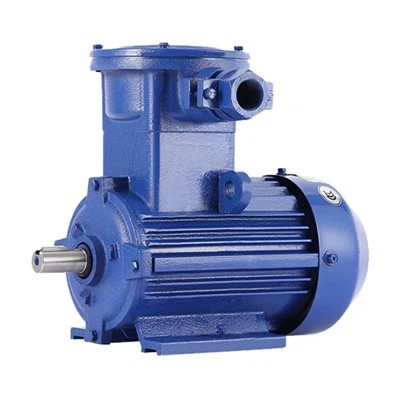
Let’s start with the basics for anyone who might be new to variable frequency drives (VFDs) and YVF2 motors. YVF2 motors are three-phase, squirrel-cage induction motors designed specifically for variable speed operation. They’re built with a robust cast-iron frame, sealed bearings, and low noise/vibration levels—features that make them ideal for running at different speeds without overheating, unlike standard industrial motors which are only rated for fixed speeds. A brake, on the other hand, is a component that stops or holds a load when the motor isn’t running or needs to hold a position against gravity, like when a conveyor belt is stopped mid-load or a hoist is holding a pallet at height.
The core question here is: why would you even need both? Why not just rely on the VFD to slow and stop the motor? VFDs do offer precise speed control, and dynamic braking (where the VFD converts the motor’s rotating kinetic energy into heat) can stop a motor quickly. But dynamic braking works best for applications where the load is moving horizontally or light, and where you don’t need to hold that position for long. For vertical loads, heavy material handling, or applications that require the motor to hold a static position for extended periods, a brake is non-negotiable. If you’re lifting a 2,000-pound pallet 30 feet in the air, you can’t trust dynamic braking to hold that load if there’s a power outage or a VFD glitch—mechanical brakes add a layer of safety and reliability that VFDs alone can’t match.
Now, the good news: YVF2 motors are fully compatible with most standard industrial brakes, and pairing them is a common, well-established practice. But there are a few critical points to get right to ensure you don’t damage either component or end up with a system that works poorly.
First, let’s talk about brake types. The most common brakes paired with YVF2 motors are electromagnetic spring-applied brakes. These brakes work by using a spring to clamp down on the motor’s shaft or a separate brake disc when power is cut, and an electromagnet to release that clamp when power is applied to the motor. This is perfect for VFD-controlled systems because it aligns directly with how the motor powers on and off: when the motor is running, the brake is disengaged; when the motor stops, the brake engages automatically. There are also DC brakes, which use a small DC current to create a magnetic field that slows the motor down, but these are less common for YVF2 pairs, mostly because they add extra wiring and can generate more heat in the motor during prolonged use.
The key thing to check when pairing a brake with a YVF2 motor is the motor’s shaft size and frame type. YVF2 motors come in standard NEMA and IEC frame sizes, so most off-the-shelf brakes will fit as long as you match the frame rating. For example, a YVF2-100L motor (a common 3kW model) has a 28mm shaft, so you’d need a brake with a 28mm bore. We’ve seen clients make the mistake of buying a brake sized for a smaller motor, which leads to slippage, or a larger brake, which puts unnecessary strain on the motor’s shaft and bearings. Our team always works with clients to cross-reference their YVF2 motor’s catalog number with brake specifications to avoid this—something that’s easy to do but can save you from downtime later.
Another point to consider is the brake’s torque rating. This is the maximum amount of force the brake can apply to stop or hold a load. For vertical applications, the brake’s holding torque needs to be at least equal to the load’s gravitational force—if your load is exerting 1,500 Nm of force downward, a brake with 1,000 Nm of torque won’t be enough. For horizontal applications, you can calculate the required torque based on the load’s weight, friction, and acceleration. We often advise clients to err on the side of a slightly higher torque rating than they calculate, because VFDs can sometimes cause sudden stops or power fluctuations that add extra stress to the brake.
Wait a minute—what about overheating? I’ve heard some people say that adding a brake to a variable frequency motor will cause it to overheat. Is that true? The short answer is no, not if you size the system correctly. The YVF2 motor is designed for variable speed operation, so it can handle small amounts of additional load from a brake, especially since the brake is only engaged when the motor is stopped or near-stationary. The only time you might run into overheating issues is if the brake is dragging while the motor is running. That’s a misalignment problem, not a compatibility one—if the brake isn’t releasing fully when power is applied, it’s rubbing against the shaft, generating heat, and wearing out both the brake and the motor. That’s a installation error, not a flaw in pairing the two components.
Let’s use a real client example to illustrate this. A few months ago, we worked with a customer who manufactures automated warehouse conveyor systems. They were using standard fixed-speed motors for their old conveyors, and when they upgraded to YVF2 motors for variable speed control, they tried to reuse their old mechanical brakes. The old brakes weren’t sized for the YVF2’s higher speed range, so when they ran the conveyors at top speed, the brakes would overheat and burn out within a month. They came to us frustrated, thinking YVF2 motors couldn’t work with brakes. We helped them select brakes with a torque rating matched to their YVF2’s frame size and speed range, and adjusted the wiring to make sure the brakes only engaged when the motor was fully stopped. Now their systems run 24/7 with no brake issues, and they’re saving 15% on energy costs by using variable speed instead of fixed speed motors. That’s exactly the kind of problem we help clients solve every day.
Another common application for YVF2 motor and brake pairs is hoists and cranes. These are inherently high-stakes applications where safety is non-negotiable. A few years back, we supplied YVF2 motors for a small crane manufacturer, and they initially used dynamic braking alone for their lifting hoists. They had an incident where a power glitch caused the VFD to drop out, and the load slipped—luckily no one was hurt, but it was a costly mistake. We worked with them to add spring-applied electromagnetic brakes to each YVF2 motor. Now, even if the VFD fails or there’s a power outage, the brake engages immediately, holding the load in place. We also recommended integrating the brake with a limit switch that triggers the brake at the top and bottom of the hoist’s travel, reducing wear by preventing the brake from engaging mid-movement. That kind of integration is what makes the pair work reliably, not just the components themselves.
Now, what about maintenance? I know maintenance is a big concern for industrial operators, and adding a brake means you have an extra component to service. But with YVF2 motors, this is minimal. Electromagnetic brakes are low-maintenance compared to other types—you just need to check the brake pads for wear every 6 to 12 months, and make sure the wiring connections are tight. YVF2 motors are designed with sealed front bearings, so you don’t have to lubricate the motor shaft where the brake attaches as often as you would with older motors. We provide a simple maintenance checklist with every YVF2 motor we supply that includes brake checks, so our clients never feel like they’re flying blind.
There is one caveat I want to mention, though: if you’re using a YVF2 motor for very high-speed applications (over 3,000 RPM), you’ll need to use a brake rated for high-speed operation. Standard brakes are designed for lower speeds, and adding a high-speed brake to a YVF2 motor running at full tilt ensures the brake’s components don’t fail from centrifugal force. This is another area where working with a supplier who knows their YVF2 line helps—we always confirm the motor’s maximum speed before recommending a brake, so you don’t end up with a brake that can’t handle the motor’s speed.
So, to circle back to the original question: yes, YVF2 variable frequency motors can absolutely be used with brakes, and it’s a pairing that works seamlessly for most industrial applications when done correctly. The key is to size the brake to match the motor’s frame, torque rating, and speed range, use the right type of brake for your application (spring-applied for most variable speed systems), and install and wire them properly to avoid dragging or misalignment.
As a YVF2 variable frequency motor supplier, our job isn’t just to sell you a motor—it’s to make sure your whole system works as efficiently and safely as possible. We’ve seen too many operators buy generic motors and brakes without considering how they work together, leading to costly downtime, premature part failure, and even safety risks. That’s why we take the time to walk through your application with you, whether you’re building a small conveyor or a heavy crane, to make sure we recommend the right motor and brake combination for your needs.
If you’re currently looking to upgrade your system with YVF2 motors and are wondering how to integrate brakes, or if you’re having issues with your current motor-brake pair, we’re here to help. We’ve worked with clients across every industry, from small machine shops to large manufacturing facilities, to get their systems running smoothly. We can provide detailed specifications for all our YVF2 motors, help you select compatible brakes, and even offer guidance on installation and integration to ensure you get the most out of your system.

Don’t let uncertainty about component pairing hold your project back. Whether you’re troubleshooting an existing system or planning a new build, we’re ready to help you find the right solution. Reach out to our team to discuss your requirements, and we’ll work with you to create a custom setup that meets your performance, safety, and budget needs.
Vertical Multistage Pump References:
- Electrical Apparatus Service Association (EASA). (2021). Variable Frequency Motor and Brake Compatibility Guidelines. EASA Technical Bulletin.
- NEMA Standards Publication MG 1-2020. (2020). Motors and Generators, Part 2: Speed Control and Adjustable Speed Drive Systems. National Electrical Manufacturers Association.
- Bosch Rexroth. (2022). Electromagnetic Brake Selection Guide for Industrial Motors. Industrial Automation Documentation.
- International Electrotechnical Commission (IEC) 60034-1. (2019). Rotating Electrical Machines – Part 1: Rating and Performance. IEC Standard.
Taizhou Goodpump Trading Co., Ltd.
We’re well-known as one of the most professional yvf2 variable frequency motor enterprises in China, featured by quality products and good service. Please rest assured to buy discount yvf2 variable frequency motor in stock here from our factory. For quotation, contact us now.
Address: No. 38, District 6, Zhengye Village, Lunan Street, Luqiao District, Taizhou City, Zhejiang Province, China
E-mail: 19548175755@163.com
WebSite: https://www.goodpump-cn.com/
