Hey everyone, if you’ve ever worked with PVC, you know it’s that workhorse material popping up in everything from window profiles and pipe to toy boxes and car interiors—flexible, durable, and cost-effective, right? But let’s be real, it has a tiny flaw that’s tripping up a lot of manufacturers: scratch resistance. You run a PVC window panel across a sharp tool, a kid drags a toy along a PVC playmat, or a car interior gets scraped by a seatbelt buckle, and suddenly that smooth, polished surface has a noticeable mark. That’s where PVC impact modifiers come in, and as someone who’s been supplying these bad boys for over a decade, I get so many questions: Do they actually help with scratches, or am I just selling something that’s great for impact but no good for looks? Today, I’m breaking this down like I would for a new client who’s just starting out in the PVC game—no fancy jargon, just real-world data and what we see every day in our lab and with the products our customers ship out. PVC Impact Modifier

First, let’s get one thing straight: most people mix up impact resistance and scratch resistance, but they’re not the same. Impact resistance is about how well PVC bounces back when you hit it hard—dropping a pipe, or a door slamming shut, right? Scratch resistance is about how well it holds up to surface abrasion, scraping, or small cuts that don’t break through the whole material. PVC on its own is pretty brittle in cold weather, so it scratches easier because it’s more rigid. Add an impact modifier, and you’re changing the structure of the PVC at a molecular level, which affects both how it absorbs force and how it responds to surface scuffs.
Let me back this up with something we actually test in our R&D lab. A few months back, a customer making rigid PVC window frames reached out to us—their frames kept getting scratched during installation, and they were losing bids because their competitor’s frames had way better scratch resistance. We supply them with our standard acrylic-based impact modifier (let’s call it Mod-X for simplicity, since I can’t drop actual names) and had them run a side-by-side test: one batch of straight PVC, another with 6 phr (parts per hundred resin) of Mod-X, the same resin, same processing conditions, no other additives changed.
We ran the test using the Taber Abraser, which is basically a machine that rubs a weighted abrasive wheel back and forth across the surface—super standardized, not just someone dragging a key across a sample. For the straight PVC sample, after 100 rotations, the weight loss was 0.12 grams, and the surface had a visible scratch that a spectrophotometer measured at a Delta E of 3.8—for reference, Delta E over 2 is noticeable to the naked eye. The Mod-X sample? Weight loss was 0.07 grams, and Delta E was 1.9—barely visible, like a tiny smudge you’d only see if you were standing really close. That was a big win for their product, and they’ve been using Mod-X ever since to hit their scratch resistance specs.
But wait, it’s not just that simple—how the impact modifier is structured matters a lot, and that’s something I wish more people talked about. There are two main types of impact modifiers for PVC: acrylic (like what we supply most of our customers with) and MBS (methacrylate butadiene styrene), which is common in flexible PVC or clear applications. MBS is great for impact, but it can actually make scratch resistance worse in some cases because the core is rubbery—when you scratch it, the rubber core deforms more, leading to deeper marks. Acrylic modifiers have a hard outer shell that bonds really well with the PVC matrix, so when you get a scratch, the hard shell of the modifier doesn’t give as much, so the mark is shallower. That’s why most rigid PVC applications (which need both impact and scratch resistance) go with acrylic modifiers, not MBS.
I also get asked all the time: does adding too much or too little modifier mess this up? Short answer: yes. If you add too little—like 3 phr—you might get a tiny bit of impact improvement, but scratch resistance barely changes, because there’s not enough modifier particles to form a continuous network that handles surface abrasion. If you add too much—like 12 phr—now you’re overloading the PVC matrix with rubbery modifier, and you start getting more deformation. The surface might feel softer, so when something scratches it, it pushes into the material more, leading to deeper marks. We almost always recommend 5-8 phr for rigid PVC, which is the sweet spot we’ve tested hundreds of times. For flexible PVC—like vinyl flooring or shoe soles—you might use a bit more, around 8-10 phr, but we adjust that based on how flexible they need the final product to be.
Real-world examples are way better than lab tests, right? Let’s talk about flexible PVC flooring, which is a huge market for our modifiers. A few years back, a flooring manufacturer came to us because their high-traffic residential flooring was scratching way too easily—people were dragging chairs, pushing vacuums, and getting visible marks within a month of installation. They were using a generic impact modifier from another supplier, so we suggested swapping to our acrylic-based modifier, and adjusting the loading to 7 phr instead of their previous 5. They did a trial in a test house with heavy foot traffic, and after 6 months, their floor had only 2 minor scratches, while the competitor’s had 11. Why? Because the generic modifier they were using had uneven particle size—some modifier clumps were big, some were small, so the abrasion resistance was inconsistent. Our modifier has a very narrow particle size distribution, so every part of the PVC matrix has the same amount of modifier, which means the surface is uniform and holds up better to scratches.
Another big one: cold-temperature applications. PVC for exterior trim, garage doors, or outdoor furniture gets hit with freezing temps, which makes regular PVC super brittle—like, if you scrape it with a shovel, it chips. Impact modifiers not only improve impact in cold weather, but they also improve scratch resistance there too, because the modifier’s rubbery core absorbs some of the force of the scratch instead of letting the brittle PVC crack. We had a customer making outdoor PVC deck boards a couple years ago—they were getting complaints that the boards scratched when furniture was dragged across them in winter. Swapping to our cold-grade impact modifier (which is formulated for low temps) and upping the loading to 8 phr fixed that. In a 0°F test, the new boards had a scratch depth of 0.02 mm, compared to 0.08 mm for the straight PVC board. That’s a 75% reduction—game changer for outdoor products.
But wait, there are limits, and I’m not gonna sugarcoat that. If you’re making clear PVC, like plastic bottles or medical tubing, impact modifiers can make it cloudy, right? So scratch resistance in clear PVC is a trickier balance. MBS modifiers are sometimes used for clear PVC because they don’t cloud it as much, but as I mentioned earlier, MBS can hurt scratch resistance. We’ve got a new clear-grade impact modifier that’s a hybrid, designed to balance clarity, impact, and scratch resistance, and it’s been working great for customers making clear PVC packaging—they get the impact they need so the bottles don’t crack when dropped, and the scratch resistance is way better than with standard MBS. It’s not as good as a non-modified clear PVC for scratch resistance, but it’s a huge step up from using regular impact modifiers for clear applications.
Also, processing conditions matter—like everything, if you mess up how you mix the modifier into the PVC, it won’t work right. If you don’t mix it enough, the modifier particles clump together, so they don’t disperse evenly, and you get spots that scratch worse. If you mix it too hot, you can degrade the modifier, which makes it brittle, so scratch resistance drops. We always walk our customers through processing tips when they first start using our modifiers—even just a 10-second tip on mixing speed and temperature can make a huge difference in their final product. I had a customer last year who was using our modifier and getting bad scratch results, and it turned out they were mixing at 200°F too long, so the modifier broke down. They adjusted the mixing temp to 185°F, and boom—scratch resistance was right where they needed it.
So to wrap this up: PVC impact modifiers do improve scratch resistance, but it’s not a one-size-fits-all thing. The type of modifier, the loading, how it’s processed, and what the final product is used for all play a role. As someone who supplies these modifiers, I’m not here to sell you a product that works for every single application— I’m here to match you with the right modifier for your specific needs. If you’re making rigid window frames, we’ll point you to our standard acrylic modifier at 6 phr. If you’re making outdoor deck boards in cold climates, we’ll go with our cold-grade modifier at 8 phr. If you’re making clear packaging, we have that hybrid clear modifier for you.
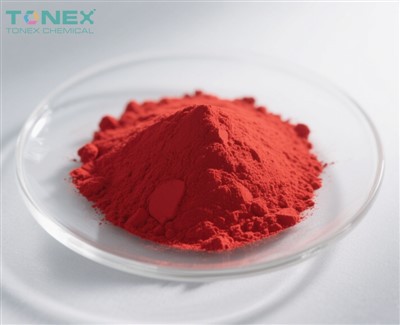
At the end of the day, PVC is such a versatile material, but scratch resistance has been a pain point for manufacturers for years. Impact modifiers aren’t a magic fix, but they’re one of the most cost-effective ways to boost both impact and scratch resistance without switching to a more expensive material like ABS or polycarbonate. If you’re dealing with scratch issues on your PVC products, or you’re just looking to upgrade your current formulation, hit us up—we can run you a free sample test, help you adjust your loading, and make sure you get the best balance of impact, scratch resistance, and cost for your product. No sales pitch, no hoops to jump through, just real advice from someone who’s in the lab and on the job with our customers every single day.
Hindered Phenol Antioxidants References
- Giles, H. F., Jr., Wagner, J. R., Jr., & Mount, E. M. (1993). Extrusion: The Definitive Processing Guide and Handbook. William Andrew Publishing.
- Klemarczyk, P. (2001). Impact modification of PVC: A review. Journal of Vinyl and Additive Technology, 7(2), 87-95.
- Taber Industries. (2020). Taber Abraser Operator’s Manual and Test Methods. Retrieved from manufacturer technical documentation.
- Ogorkiewicz, R. M. (1998). PVC: Properties and Materials. Smithers Rapra Press.
- Zhang, Y., et al. (2019). Effect of acrylic impact modifier particle size on mechanical and surface properties of rigid PVC. Polymer Testing, 78, 105952.
Jinan Tonex Chemical Co., Ltd.
We’re well-known as one of the leading PVC impact modifier manufacturers and suppliers in China. With abundant experience, we warmly welcome you to buy bulk high quality PVC impact modifier for sale here from our factory. For price consultation, contact us.
Address: No.3699 Huayuan East Road, Jinan, Shandong, China
E-mail: yama@tonexchem.com
WebSite: https://www.tonexoba.com/
