If you’ve ever walked through a utility-scale solar farm or observed a rooftop residential PV installation, you’ve probably noticed the long, thin metal rails holding solar panels in place—these are PV guide rails, and they’re the unsung backbone of any solar system. As a supplier of these rails for over eight years, I’ve seen firsthand how even a tiny quality defect in a guide rail can snowball into big problems later: a panel shifting mid-storm, accelerated corrosion that cuts a system’s 25-year warranty short, or loose connections that cause hotspots and lower energy output. That’s why testing the quality of PV guide rails isn’t just a “check-the-box” step for our team—it’s the non-negotiable foundation of every rail we ship. Today, I’m pulling back the curtain on exactly how my team tests our rails, and what every solar installer, EPC (engineering, procurement, construction) firm, and project manager should look for when vetting their own rail suppliers. PV Guide Rail

First, let’s get one thing straight: not all PV guide rails are created equal. A lot of low-cost imports cut corners on material grade, coating thickness, or dimensional precision to hit a lower price point, but those cuts come with hidden risks. For example, one of our clients out west once switched to a “cheaper” rail supplier two years ago, only to call us last fall to replace 12,000 rails that had corroded so badly in their desert climate that panels were tilting at odd angles. That cost them tens of thousands of dollars in labor and lost energy production—way more than the savings they’d gotten on the cheaper rails. So, our testing process starts with verifying the raw material, because if the base metal isn’t up to snuff, no amount of finishing will save the rail.
The first core test we run is material composition analysis, and we don’t rely on the mill’s certificate of compliance alone. We pull random samples from every batch of steel or aluminum we receive, then use a portable X-ray Fluorescence (XRF) analyzer to test their actual chemical makeup. For our steel rails (we make both steel and aluminum, depending on the project’s needs), we specify Grade 50 high-strength carbon steel, which has a yield strength of 50,000 psi—critical for supporting heavy panels in high wind or snow loads. If the XRF shows less than 0.25% carbon, for example, the steel is too soft; it’ll bend under load instead of holding panels securely. For aluminum rails, we use 6005-T5 aluminum alloy, which has better strength-to-weight ratio than lower-grade aluminum, and we check for trace elements like silicon and magnesium that ensure the alloy will weld (or be extruded) evenly without weak spots. We once rejected an entire shipment of steel because the XRF showed it was Grade 35, not Grade 50, and that’s a non-negotiable rule we follow—no exceptions.
Next up is dimensional and structural testing, because a rail that’s the wrong length or has uneven slots won’t install right, even if it’s strong. Every rail is precision-extruded or roll-formed to exact specifications, so we use a coordinate measuring machine (CMM) to check critical dimensions: the height of the rail’s “side flanges” that hold the panel clamps, the spacing of the pre-drilled slots for fasteners, and the overall length (we tolerate a maximum deviation of ±1mm for 6m rails—small, but enough to throw off a full array of 1,000 panels). Then there’s load testing, which is where we simulate real-world stress to make sure the rail won’t fail when it matters. We mount a sample rail to a test stand, attach weights that exceed the maximum load it’ll ever see in the field (we test to 2x the design load for wind and snow), and track deflection—how much the rail bends under that weight. If the deflection exceeds 1/180 of the rail’s length, that means it’s too flexible; it’ll sag over time, which can cause panels to crack or gaps to form between panels that let rain and debris in. For example, a 6m steel rail should deflect no more than 33mm under our test load, and if it goes beyond that, we send the entire batch back to our manufacturer for adjustments. We also run impact testing—we drop a 1kg steel ball from 1m height onto the rail’s center to simulate a small tree branch falling or a construction tool being dropped, and check for cracks or dents that could weaken the structure.
Corrosion resistance is maybe the most important test for PV guide rails, because solar systems are exposed to the elements year-round—desert heat, coastal salt spray, cold mountain snow, industrial air pollution. We’ve had rails that passed all other tests but failed corrosion, and we don’t ship those. Our steel rails get a hot-dip galvanized (HDG) coating, which is the gold standard for outdoor steel, and we test the coating thickness with a digital coating thickness gauge. The minimum required thickness for HDG steel used in PV rails is 85 microns, but we go a step further—we test every rail to hit 100 microns, because in coastal areas, salt spray can eat through a thinner coating in just 5 years. We also run a salt spray test (the ASTM B117 standard, for anyone who knows the code), where we spray a 5% salt solution on a sample rail for 1,000 hours (that’s roughly 3 years of real-world coastal exposure). After the test, we check for red rust—any sign of rust means the coating is defective, and the batch gets scrapped. For our aluminum rails, we use anodized coatings, and we test the anodize thickness to a minimum of 20 microns, plus a wear test: we rub the coating with a steel wool pad 100 times and make sure no aluminum is exposed. We once had a batch of aluminum rails that looked great but had anodize thickness of only 12 microns—they would’ve worn through in 2 years in a high-wind area where sand is common, so we rejected them immediately.
Surface finish and compatibility testing is another step that a lot of suppliers skip, but it’s vital for preventing issues with panel clamps and fasteners. If the rail’s surface is too rough, the clamp that holds the panel can scratch the panel’s frame, which leads to corrosion on the panel itself. We check surface roughness with a profilometer, aiming for a Ra value of less than 3.2 microns—smooth enough to avoid scratching, but not so smooth that clamps slip. We also test galvanic compatibility, because if two dissimilar metals touch without a barrier, they’ll corrode each other. For example, if you mount an aluminum clamp to a steel rail without a plastic or EPDM insulator, the steel will corrode the aluminum (or vice versa) in as little as a year. Our team tests this by pairing a sample rail with a sample clamp of the opposite metal, exposing them to a humid chamber at 85% humidity and 40°C for 500 hours, then checking for galvanic corrosion at the contact point. If there’s any sign of corrosion, we add a compatible insulator and test again until it passes.
Finally, we run a full-scale installation simulation, which is the test that ties everything together. We build a 10-panel array using the test rail sample, use our standard clamps and fasteners, and torque all fasteners to the manufacturer’s specified torque. Then we mount the array to a test frame and run vibration testing—simulating the constant wind that would hit a utility-scale farm—for 10 million cycles (that’s about 5 years of regular wind exposure). After the vibration test, we check all connections for looseness, and inspect the rails for cracks or wear. We also take energy output measurements with the array under simulated sunlight, to make sure the rails don’t cause any shading or misalignment that would lower output.
Now, I know what some of you are thinking: “This all sounds expensive—can’t I just buy cheaper rails and save money?” You can, but as the client I mentioned earlier learned, the long-term costs of rail failure are way higher than the upfront savings. A 5MW solar farm might need 10,000 rails; a 1mm mistake in rail dimensions could mean 1,000 panels don’t line up right, costing $50,000 in rework. A bad corrosion test could mean replacing 10,000 rails every 5 years, which is another $150,000 in labor and parts.
If you’re in the market for PV guide rails, don’t just ask for a price quote—ask about the testing process. Demand to see batch test reports for material composition, coating thickness, salt spray resistance, and load testing. Any reputable supplier should be able to provide these for every batch, no questions asked. If a supplier hesitates or can’t produce those reports, walk away—you’re taking a big risk.
At the end of the day, PV guide rails are the quiet support system for a solar project that’s going to operate for 25+ years. Cutting corners on their quality isn’t just bad for your project—it’s bad for the solar industry’s reputation. We built our business on the promise that every rail we ship is tested to hold up through hurricanes, blizzards, and decades of sun, and that’s a promise we stand behind.
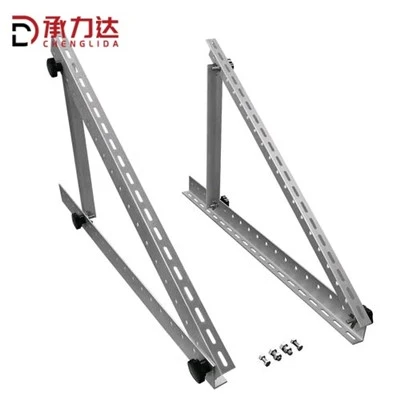
If you’re working on a solar project, big or small, and you need reliable, tested PV guide rails that won’t let you down, feel free to reach out. We can send over batch test reports for any of our products, answer your questions about testing, or even send sample rails for your own internal testing. Let’s build solar systems that last—together.
PV Guide Rail References
- ASTM International. Standard Practice for Operating Salt Spray (Fog) Apparatus. ASTM B117, 2021.
- International Organization for Standardization. Solar Energy — photovoltaic modules — Part 3: Principles for testing and design qualification. ISO/IEC 61730-3, 2022.
- Steel Structures Painting Council. Protective Coatings for Steel Structures in Severe Environments. SSPC Guide 12, 2020.
- Aluminum Association. Specifications for Aluminum Structures. AA-2015, 2021.
Wuxi Chenglida Machinery Co., Ltd.
We are one of the most professional pv guide rail manufacturers and suppliers in China, also support customized service. Please feel free to buy durable pv guide rail made in China here from our factory. Quality products and reasonable price are available.
Address: No.4 Ruifeng Road, Huishan District, Wuxi City
E-mail: postmaster@wxcldjx.com
WebSite: https://www.wuxi-chenglida.com/
