If you’ve ever wandered around a wire harness shop, you know how noisy, messy, and wasteful manual harness making can get. Technicians soldering wires by hand run the risk of dropping a connector or snapping a copper strand, and spools of excess wire pile up like tangled yarn around a desk. That’s why, as someone who’s supplied fully automatic wire harness machinery for over eight years, I’ve watched this space shift from clunky, energy-hungry boxes to tools that actually treat the planet like a priority—while still cranking out perfect harnesses every single time. Fully Automatic Wire Harness Machinery
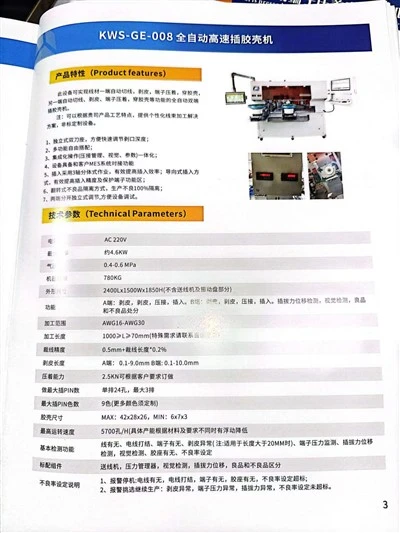
Let’s start with the biggest culprit in manual or semi-automatic harness production: material waste. A human technician might snip an inch too much wire to avoid redoing a bad cut, or accidentally nick a copper conductor so bad they have to toss the whole length. But our fully automatic machines? They’re programmed to measure wire length down to the millimeter. If a harness needs a 12.7cm red wire and a 7.6cm blue wire, the machine pulls exactly those lengths from the spool, no overage, no guesswork. I remember a customer who switched from semi-auto lines to our equipment last year—they were tossing 12% of their wire before, now it’s less than 1.5%. That’s thousands of meters of copper and plastic insulation not going to landfill every month, and they’re saving money too, which is a win no matter how you slice it.
Next up, energy use. A lot of older automatic machines run 24/7 even when there’s no job to process—they idle, heating up their cutting blades or holding wires ready, wasting power like it’s free. Our fully automatic models have smart power management built in. If there’s no new harness job queued, they drop to a low-power standby mode in 90 seconds, so they don’t guzzle electricity all night. We also use variable frequency drives (VFDs) on every motor—these adjust how much power the motor uses based on what the machine is actually doing, not just running at full speed nonstop. A local automotive parts maker swapped their old line for one of ours, and their electric bill for that section dropped 28% in three months. That’s not just a stat—it’s less fossil fuel being burned to make electricity, right there.
Then there’s the whole topic of hazardous materials. Manual harness production relies a lot on hand soldering, which uses lead-based solder and rosin flux that gives off fumes. Technicians have to wear masks and work in ventilated booths, but even then, that flux residue and lead dust can end up on the floor or in the air. Our machines use automated soldering processes that use lead-free solder, which is way less toxic, and they have enclosed fume extraction systems that capture 99% of any remaining fumes—no more toxic dust settling on workbenches or getting into the air. We’ve also worked on cutting out other hazardous stuff, like the harsh solvents used to clean cut wires. Our machines use precision stripping that doesn’t leave insulation residue on the conductor, so no more wiping down parts with chemicals that need special disposal.
Wait, let’s not forget about longevity and recyclability. A lot of cheap automatic machines break down after two or three years, so companies just toss them and buy new ones. Our fully automatic machinery is built with heavy-duty, industrial-grade parts—steel frames, high-quality motors, modular components that can be repaired instead of replaced. If a cutting blade gets dull, you just swap out that one blade, not the whole machine. And when a company does upgrade to a newer model down the line, our equipment is 90% recyclable. The metal parts go to scrap yards, the wiring and plastic components are either reused or processed, and we take back old machines from our customers to refurbish or recycle—so they don’t end up in a landfill where toxic plastics can leach into soil and water.
Another thing that’s easy to overlook: space, which ties into waste too. If a harness shop uses semi-automatic lines and manual workstations, they need a huge floor space to store spools, set up work areas, and pile finished parts. That means more warehouse heating and cooling, more energy just to keep a big space comfortable. Our fully automatic machines are compact—they fit in a quarter of the space a semi-auto line needs, and they hold multiple wire spools on board, so you don’t have a dozen separate wire stands taking up room. Less space means less energy wasted conditioning that space, and customers can use their floor area for other things instead of expanding.
Oh, and there’s the noise factor, which isn’t just annoying—it ties into environmental quality too. Older automatic machines are so loud that shops have to use ear protection, and the noise pollution can be bad for the surrounding area too. Our machines use noise-dampening panels and precision parts that don’t rattle or grind loudly when they run. A customer in the Midwest told us their shop used to have to schedule night shifts so they wouldn’t disturb nearby residents, but after switching to our machinery, they can run 24/7 without a noise complaint. That’s a small win, but every bit of reducing noise pollution helps keep communities healthier.
I get it, some people might think “automatic machines are just for big companies—small shops can’t afford them.” But that’s not true. We’ve made our equipment flexible for small to medium shops too, so they can handle small batch orders without wasting material. For example, a custom electronics shop might only need 50 of a specific harness, and our machines can switch between harness designs in 10 minutes, no need to reset 10 different manual stations. That means small shops don’t have to run big batches to be cost-effective, which means less overproduction of parts that might go unsold and end up as waste.
I’ve been in this game long enough to see how many manufacturing operations treat waste and energy as afterthoughts. But our fully automatic wire harness machinery is built because we noticed that good business doesn’t have to be bad for the planet. We’re not selling a machine that just cuts wires faster—we’re selling a tool that cuts down on waste, uses less energy, reduces toxic materials, and lasts longer. At the end of the day, if your production is cleaner and cheaper, that’s a win for your bottom line and a win for the planet.

If you’re tired of tossing half your wire spools, getting hit with sky-high energy bills, or dealing with hazardous fumes from manual work, let’s chat. We can talk about what kind of harnesses you make, how much you produce, and figure out if our machinery is a good fit for you. No sales pitch, no pressure—just real talk about what will help your business run smoother and be more eco-friendly. Reach out whenever works for you.
Intelligent Wire Processing Machine References
- U.S. Environmental Protection Agency. (2022). Reducing Waste in Manufacturing: Wire Harness Production Case Studies. EPA Sustainability Program.
- International Electrotechnical Commission. (2021). Energy Efficiency Standards for Industrial Assembly Machinery. IEC 60034-30-2.
- Occupational Safety and Health Administration. (2020). Hazardous Substance Reduction in Electronics Manufacturing. OSHA Workplace Safety Guidelines.
- European Commission. (2023). Circular Economy Principles for Industrial Machinery Design. EU Industrial Policy Report.
- National Institute for Occupational Safety and Health. (2022). Noise Pollution Reduction in Small Manufacturing Facilities. NIOSH Publication.
Suzhou Keweisi Electronic Technology Co., Ltd.
Address: Yunchuang road No.221, block C, Haibo tech park,Suzhou, P.R China.
E-mail: wenwei200982@126.com
WebSite: https://www.szkowas.com/
