If you’ve ever been around a horizontal autoclave being used for sterilization, you’ve probably thought the same thing at some point: “Wait, how loud is this thing, actually?” I get it—when you’re sourcing equipment for a lab, clinic, or manufacturing line, noise level isn’t just a “nice-to-have” detail. It ties directly to operator comfort, OSHA compliance, even how well your team can communicate while working. As someone who’s been supplying horizontal autoclaves for years, I get asked about noise level more than I expected, and I’m here to break it down like I would to a regular client—no overly technical jargon, no corporate fluff, just real, actionable info. Horizontal Autoclave

First, let’s get one thing straight: not all horizontal autoclaves sound the same. A lot of variables impact noise, and I can’t just give you a single number that works for every unit I sell. But I can tell you the range you’ll see across our products, why that range exists, and what factors will tweak how loud your specific unit ends up being. For context, let’s start with a quick science check that’s actually relevant here: noise is measured in decibels (dB), and 0 dB is the threshold of human hearing. A normal conversation is about 60 dB, a vacuum cleaner is around 70 dB, a lawnmower is 90 dB, and anything over 85 dB requires hearing protection for extended exposure. That’s a key baseline to keep in mind.
Now, our horizontal autoclaves (the ones I supply for labs, medical facilities, pharmaceutical production, even food processing) typically fall between 68 dB and 82 dB during their active cycles. Let me clarify: when we say “active cycles,” we’re talking about the heating, pressurization, and exhaust phases—those are the parts that make noise. The standby phase, when the autoclave is holding pressure after sterilization, is way quieter, usually around 55 dB, similar to background office noise. That’s a big difference, and a lot of suppliers don’t specify which phase they’re referencing, so that’s one thing I always make sure to explain to clients early on.
Let’s talk about why there’s a range of 14 dB between our quietest and loudest models. The biggest factor is the blower system. Horizontal autoclaves rely on fans to circulate steam evenly, which is non-negotiable for consistent sterilization. But not all blowers are created equal. Our entry-level horizontal autoclaves (great for small to mid-sized labs that don’t run 10+ cycles a day) use standard industrial blowers that hit around 80 dB during peak heating. The mid-range models, which are our most popular, have upgraded, sound-dampened blowers and insulated chamber walls that bring that down to 73–76 dB—about the same as a normal conversation, so you can work right next to it without raising your voice. Then our high-volume models, designed for facilities running 20+ cycles a day (like pharmaceutical manufacturing), have extra-large insulated chambers and variable-speed blowers that adjust to cycle needs, maxing out at around 82 dB. That’s right at the OSHA threshold where extended exposure requires hearing protection, but since those units run cycles on a timer, operators aren’t right next to them for hours at a time.
Another big variable is where you place the autoclave and how it’s installed. A horizontal autoclave’s sound travels differently depending on the surface it’s sitting on, and whether it’s secured properly. A friend of mine who runs a veterinary clinic told me they noticed their autoclave was louder than expected, only to realize it was sitting on a flimsy wooden workbench instead of a concrete base. Once they moved it and secured the mounting brackets, the noise dropped by about 5 dB. Same with the exhaust: if you vent the autoclave directly into a room instead of through an external wall vent, that high-pressure steam escaping will add a few decibels. It’s not our autoclave’s fault—it’s installation, and it’s a super easy fix that I always walk clients through during setup.
I also get questions about noise vs. performance. A lot of people assume quieter autoclaves are less powerful, and louder ones are better. That’s a myth, full stop. The sound-dampening tech we use in mid and high-range models doesn’t sacrifice sterilization effectiveness at all. We test every unit before it leaves our facility: we run 50+ cycles, measure pressure consistency, steam distribution, and noise level side-by-side with older, louder models. The only difference is that the blowers and chamber walls are lined with acoustic foam and heavy-duty insulation that traps sound without disrupting the steam flow. I’ve had pharmaceutical clients switch from their old 90 dB autoclaves to our mid-range units and save on hearing protection costs while still meeting all their sterilization standards.
Wait, let’s also address a common misconception: horizontal vs. vertical autoclaves. People sometimes mix these up when asking about noise, so let’s clear that up. Vertical autoclaves are smaller, have a smaller chamber, and their exhaust is closer to the base, so they tend to be a bit louder on average—usually 75–85 dB during cycles. Horizontal autoclaves have longer chambers, mounted horizontally, so the components that make noise are spread out and further from ground level, which keeps sound lower and more evenly distributed. That’s a big reason labs and clinics prefer horizontal units for spaces where operator proximity is a concern.
Now, what about OSHA and compliance? I know that’s a big one for a lot of our clients. OSHA’s Permissible Exposure Limit (PEL) for noise is 90 dB over an 8-hour workday, with a 5 dB exchange rate (meaning every 5 dB increase cuts the allowed exposure time in half). So our horizontal autoclave max of 82 dB means operators can be exposed for over 8 hours a day without needing hearing protection, which is a huge win. That’s another reason why we design our high-volume models with variable-speed blowers—they only crank up to full speed when they need to, so most of the cycle time, they’re running quieter. I’ve had clinics with tight space constraints swap vertical autoclaves for ours specifically to avoid noise-related compliance issues, and it’s made a massive difference for their day-to-day operations.
Let’s also talk about real-world feedback, because numbers only tell part of the story. Last year, we installed a batch of our mid-range horizontal autoclaves at a local research university. The lab manager there told me they were worried about noise disrupting adjacent rooms where students were doing sensitive audio experiments. After installing them, they did their own sound test and found the units only registered 74 dB in the hallway outside the lab, and 62 dB in the next room over—way quieter than their old vertical units, which made the hallway echo so bad they had to schedule quiet time for experiments. That’s the kind of real impact we care about, not just spec sheets. If noise is a priority, we can also add optional sound enclosure kits for our units, which bring the peak noise down by another 3–4 dB, perfect for tight or open-concept workspaces.
Wait, I should be honest about one exception here: transport and installation noise. When you first get the autoclave, moving it into place can be loud, but that’s temporary, and it’s not something we control beyond working with clients to plan smooth deliveries. Once it’s set up and calibrated, that transport noise is gone. And minor adjustments during operation—like if the door isn’t sealed all the way, that can add a small whine during pressurization. We include a detailed setup guide and on-demand support to fix that, so that never becomes a long-term issue.
At the end of the day, when you’re choosing a horizontal autoclave, noise level is just one piece of the puzzle, but it’s an important one. It’s not about getting the quietest unit possible for no reason—it’s about getting a unit that fits your workspace, your team’s needs, and your regulatory requirements. I’ve seen too many clients go for the cheapest autoclave without checking noise level, only to deal with operator complaints, compliance headaches, or even lost work time because they can’t hear each other or run sensitive processes.
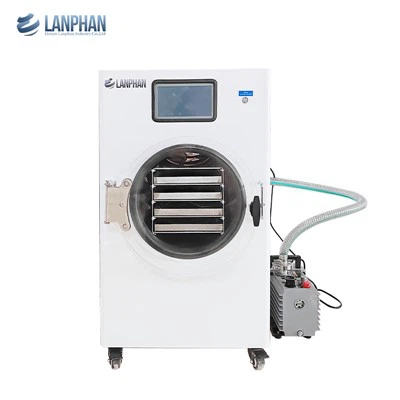
If you’re in the market for a horizontal autoclave and want to dive deeper into noise levels, or talk about which model would work best for your space, feel free to reach out to our team to connect for a custom consultation. We can send you independent noise test data for every model, walk you through installation tips to minimize sound, and even answer any other questions you have—sterilization performance, cycle times, whatever you need. Don’t let noise be an afterthought when sourcing your autoclave; it’s worth getting right from the start.
Trichome Separator References:
- Occupational Safety and Health Administration (OSHA). 29 CFR 1910.95: Occupational noise exposure. U.S. Department of Labor, 2023.
- International Organization for Standardization (ISO). ISO 17664:2017: Processing of health care products – Information for the manufacture of medical devices for reprocessing. ISO, 2017.
- National Institute for Occupational Safety and Health (NIOSH). Noise and Hearing Conservation. Centers for Disease Control and Prevention, 2022.
Henan Lanphan Technology Co., Ltd.
We’re well-known as one of the leading horizontal autoclave manufacturers and suppliers in China. With abundant experience, we warmly welcome you to buy high quality horizontal autoclave for sale here from our factory. For price consultation, contact us.
Address: Room 801, East Tower, Xiyuan Square, Zhongyuan District, Zhengzhou City, Henan Province
E-mail: lanphantech@lanphan.com
WebSite: https://www.lanphantech.com/
