If you’ve ever pulled up your favorite road trip playlist, tuned into a local news broadcast, or even used a wireless microphone at a backyard event, you’ve interacted with an FM RF receiver—whether you realized it or not. As someone who’s spent the last 12 years supplying RF transceivers, receivers, and transmitters to everything from community radio stations to industrial wireless sensor teams, I’ve seen firsthand how many people take this tech for granted. It looks like black magic until you break it down: it’s a precise, step-by-step system that turns invisible FM radio waves into sound you can hear. Let’s walk through how it works, and why picking the right receiver matters if you don’t want to miss a single song or news alert. RF Transceivers Receivers Transmitters

First, let’s get the basics straight: FM stands for Frequency Modulation, and it’s one of the most widely used modulation schemes in RF (radio frequency) communication. Unlike AM, which changes the amplitude (or height) of a radio wave to carry data, FM modulates the frequency of a carrier wave—meaning it shifts the wave’s tiny frequency up and down in sync with the audio signal (think of a voice or guitar string). The benefit of this? FM is way less prone to static and interference from things like power lines or other RF devices, which is why it’s been the go-to for broadcast radio, walkie-talkies, and small wireless receivers since the 1950s.
That carrier wave we just mentioned? It’s the “delivery truck” for the audio data, and it’s transmitted at a specific frequency allocated for FM broadcast. For example, most local stations in the U.S. sit between 88 MHz and 108 MHz—those numbers you dial into on your car stereo. For industrial or specialized receivers, that frequency range might be different, but the core principle stays the same. Now, how does that invisible wave make its way through the air, and how does a receiver pull the audio out of it? Let’s break this down into the five core parts of every standard FM RF receiver, starting with the antenna.
Your antenna is the first point of contact with the RF wave, and it’s way more important than most people give it credit for. When an FM carrier wave travels through the air, it induces a tiny electrical current in any conductive metal near it—like the metal rods in your car’s radio antenna, or even the trace wires on a circuit board in a compact receiver. The current is super small, usually measured in microvolts (that’s millionths of a volt), so we call this the received signal. The problem here is that the antenna isn’t just picking up the target FM wave—it’s also grabbing signals from other stations, local interference from power lines or Bluetooth devices, and even static from the atmosphere. So the antenna feeds this messy mix of signals to the next part: the RF front end, or tuner section.
The tuner’s job is simple, but critical: it filters out all the signals you don’t want, and isolates the exact FM frequency you’re trying to listen to. It does this with a combination of passive components—like capacitors and inductors (coils of wire)—that make up tuned circuits, or filters. These filters are designed to only respond to the specific frequency of your target station. So if you dial into 92.3 FM, the tuner will block out 91.9 FM and 92.7 FM, as well as any 2.4 GHz Wi-Fi signal or static from a nearby motor. Some higher-end receivers use active filters (with amplifiers built in) to make this even cleaner, which is why professional broadcast receivers sound clearer than a cheap portable radio.
But wait—after filtering, the signal is still way too weak to use. Remember that microvolt-level current from the antenna? We need to boost that a lot, without amplifying all the unwanted noise we just filtered out. That’s where the low-noise amplifier (LNA) comes in. Unlike a regular amplifier, which cranks up everything, an LNA is tuned to the frequency of your target FM signal, so it only amplifies the desired signal and a tiny bit of low-level noise. That’s why it’s called “low-noise”—it keeps the signal-to-noise ratio (SNR) high, which is what makes your music sound crisp, not fuzzy. For any team building RF devices, whether it’s a new wireless microphone system or a sensor network, the LNA is a make-or-break component—skimp on it, and you’ll get garbled signals even from strong stations.
Now we have a filtered, amplified FM carrier wave—modulated with audio—but we still can’t hear it. We need to get rid of the carrier wave entirely and pull the original audio out. That step is called demodulation, and for FM signals, it’s done with a demodulator circuit. There are a few common types of FM demodulators, but the most widely used in modern receivers is the phase-locked loop (PLL) demodulator. Here’s how that works: the PLL creates a replica of the incoming FM carrier wave, and it locks onto the wave’s frequency. As the original carrier’s frequency shifts up and down with the audio, the PLL adjusts its replica to match, and that adjustment creates an output signal that’s exactly the original audio we need. Another old-school type is the ratio detector, but PLL demodulators are more stable, especially for weak signals, which is why they’re standard in today’s receivers.
Once demodulation is done, we have a raw audio signal—usually low-frequency, around 20 Hz to 15 kHz, which is the range humans can hear. But this signal is still weak, and it might have a little leftover noise from the demodulation step, so it goes through two more stages: de-emphasis filtering and audio amplification. Let’s talk about de-emphasis first—this is a trick to reduce high-frequency noise, a quirk of how FM broadcast works. When a radio station transmits an FM signal, they use a pre-emphasis filter to boost high frequencies before broadcasting, which makes them stand out more against noise. At the receiver, we use a de-emphasis filter to roll those high frequencies back down to their original level, which cuts out extra static on treble notes like cymbals or a singer’s high C. After that, the audio goes to an audio amplifier, which cranks it up enough to power speakers, headphones, or another device’s input. That’s the whole process: from invisible air waves to sound you can actually enjoy.
I’ve spent years talking to customers who come to our team with questions about FM receivers—some are small business owners putting together a local community radio, others are industrial engineers building wireless sensors for factory floors, and a few are hobbyists making custom wireless microphones. One thing I always tell them is that “one size fits all” doesn’t work here. A receiver built for a home car stereo has way different requirements than one built for a remote sensor that needs to pick up FM signals from 10 miles away. For example, a community radio station might need a receiver with a wider tuning range to cover all their local affiliate frequencies, while a factory might need a receiver with ruggedized components to work in high-temperature, high-noise environments. That’s why our portfolio of RF receivers is tailored for different use cases—we don’t sell generic parts, because generic parts lead to generic results (or worse, failed projects).
Let’s also clear up a common myth: a lot of people mix up FM receivers and transceivers. A transceiver does exactly what its name says—transmits and receives signals—while a receiver only listens. But a lot of our customers come to us looking for transceivers for projects like ham radio or two-way comms, and they end up needing a companion FM receiver to process the incoming signal. That’s the value of working with a supplier that understands the whole RF ecosystem, not just one part. We don’t just sell you a receiver and send you on your way—we’ll walk you through choosing the right antenna, LNA, and demodulation circuit for your specific frequency range and environment. Whether you’re working in a dense urban area with lots of RF interference, or a remote rural spot where signals are weak, we can help you spec a receiver that performs.
Another thing I see a lot is people ignoring signal path design, which is just as important as the individual parts you pick. Even if you have a high-end LNA and a precision demodulator, if your receiver’s circuit board is laid out poorly—with signal lines too close to power lines, or the ground plane not designed right—you’ll get interference that ruins performance. That’s why we work closely with our customers on not just component selection, but also basic design tips to make sure their receiver works as intended. We’ve seen too many small teams waste time and money building a receiver that sounds clear in a lab, but cuts out when placed in a busy office or near a power substation, just because they skipped a few simple signal path rules.
If you’re working on a project that needs reliable FM RF receivers, or if you’re updating your current wireless system to reduce static or extend range, our team can help. We’ve supplied receivers for everything from small-scale community radio to large industrial wireless networks, and we know how to tailor solutions to fit your exact needs, no matter how specific your frequency range or environment is. We don’t do generic specs or push overpriced parts that you don’t need—we listen to what you’re trying to build, and we provide RF components that actually perform for your use case.
Before I wrap up, let’s quickly recap the whole process to make sure it sticks: An FM receiver starts with an antenna that picks up tiny RF waves, feeds them to a tuner that filters out unwanted signals, an LNA that amplifies the desired signal without adding noise, a demodulator that pulls the audio data out of the carrier wave, a de-emphasis filter that cuts static, and an audio amplifier that powers your speakers. It’s a simple, elegant system, but every step has to work right for the final result to be clear.
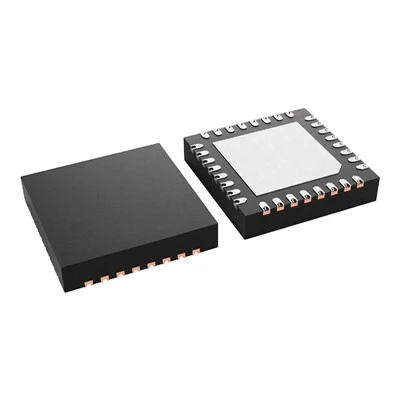
If you’re in the market for RF receivers, transceivers, or transmitters, or if you just have questions about how to spec the right parts for your project, reach out to our team to discuss your needs. We don’t have generic sales pitches, and we don’t believe in one-size-fits-all solutions—we’ll work with you to make sure you get the right components for your budget and performance requirements.
RF Transceivers Receivers Transmitters References
- Rappaport, T.S. Wireless Communications: Principles and Practice. 2nd ed. Prentice Hall, 2002.
- Carson, J.R. Notes on the Theory of Frequency Modulation. Proceedings of the IRE, vol. 28, no. 5, 1940, pp. 168–176.
- Frenzel, L.E. Principles of Electronic Communication Systems. 4th ed. McGraw-Hill, 2016.
- International Telecommunication Union. Radio Regulations: Volume I. ITU, 2020.
- Columbia, W. Understanding FM Receiver Design for Commercial Applications. RF Design Magazine, vol. 12, no. 3, 2018, pp. 22–27.
Hainan Huanyu Technology Co., Ltd.
As one of the most professional rf transceivers receivers transmitters manufacturers and suppliers in China, we’re featured by quality products and good service. Please rest assured to wholesale durable rf transceivers receivers transmitters in stock here from our factory. Customized orders are welcome.
Address: Jingrui Building, No. 18 Longkun North Road, Jinmao Street, Longhua District, Haikou City, Hainan Province
E-mail: Business-mall@hy-kj.ltd
WebSite: https://www.hykj-chip.com/
